Ghost Town
People are dying waiting for housing in Kalgoorlie while all around are empty homes the government owns
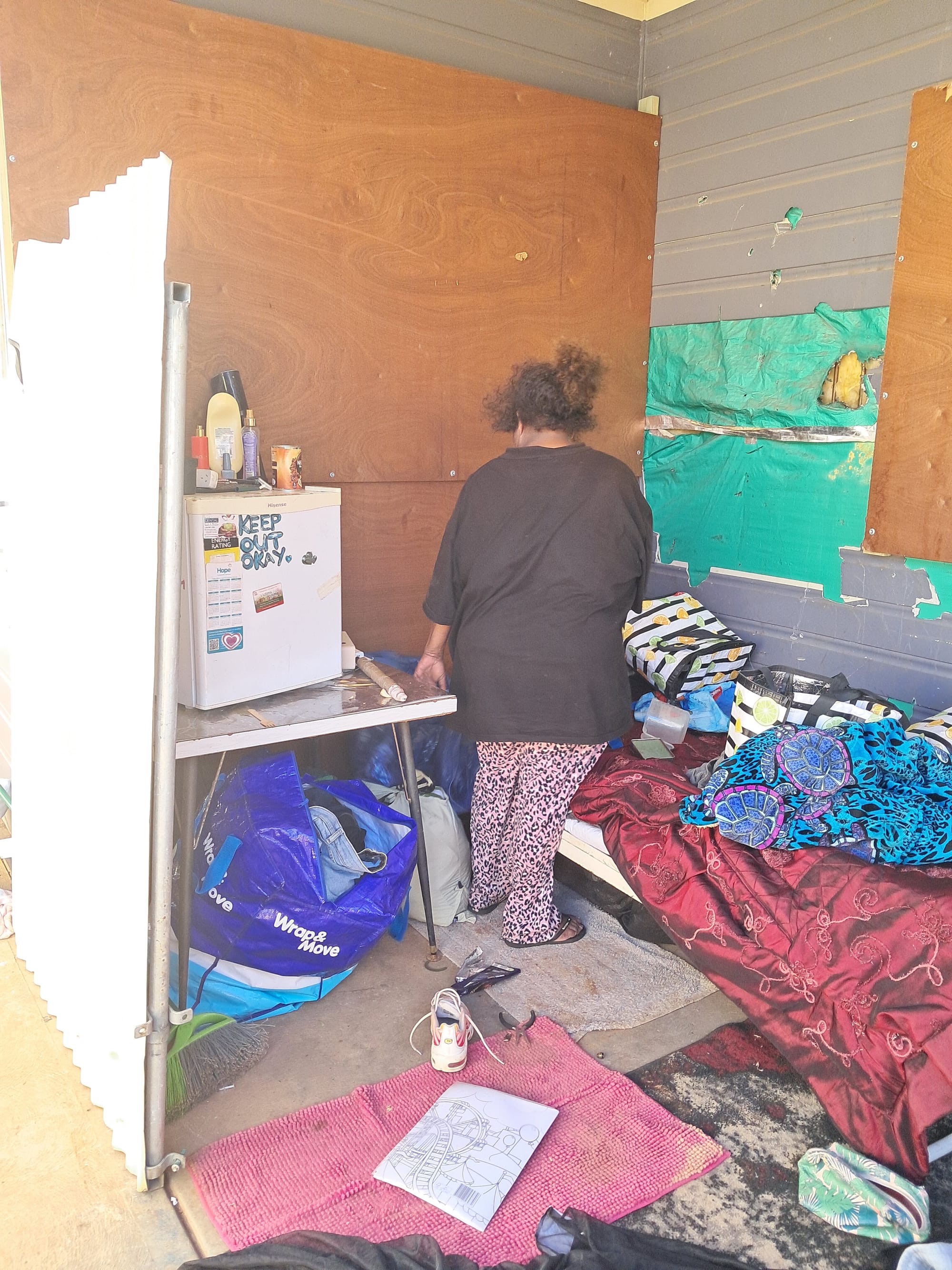
He was lying on a mattress, in the flickering blue light of the TV, with an oxygen tank and a mask next to him. In the corner was a larger tank, and in the corridor outside several more were lined up. A pedestal fan was on, and a cup of tea sat in a thermos on the side table next to the oxygen.
He had been released from Kalgoorlie hospital months earlier with severe emphysema, but he didn’t have a home to go to. A letter from his doctor to the Department of Housing seemed to mean nothing. Several years previously, his daughter told me, he’d had to leave his public housing at Mount Margaret Mission, deep in the Western Australian Goldfields, due to dust from nearby mining and the distance from the hospital treatment he needed. Since then, he’d been on the priority waitlist for public housing in Kalgoorlie, sleeping rough or more recently couch-surfing with relatives in the town.
His daughter, Patricia, also homeless and waiting for public housing, stayed with him to care for him. I asked if it would be OK to interview him briefly about the impact of his housing situation on his health.
“Not good,” he said weakly. “Not good at all. It might deteriorate, living rough. It can’t get any better.”
He died nine days after we spoke.
Kalgoorlie is a ghost town. I spent several days there last month, including the Australia Day long weekend, and expected a kind of wild west atmosphere, which I vaguely recalled from my last trip there 20 years ago and bawdy coverage of the “Diggers & Dealers” conference in The West Australian.
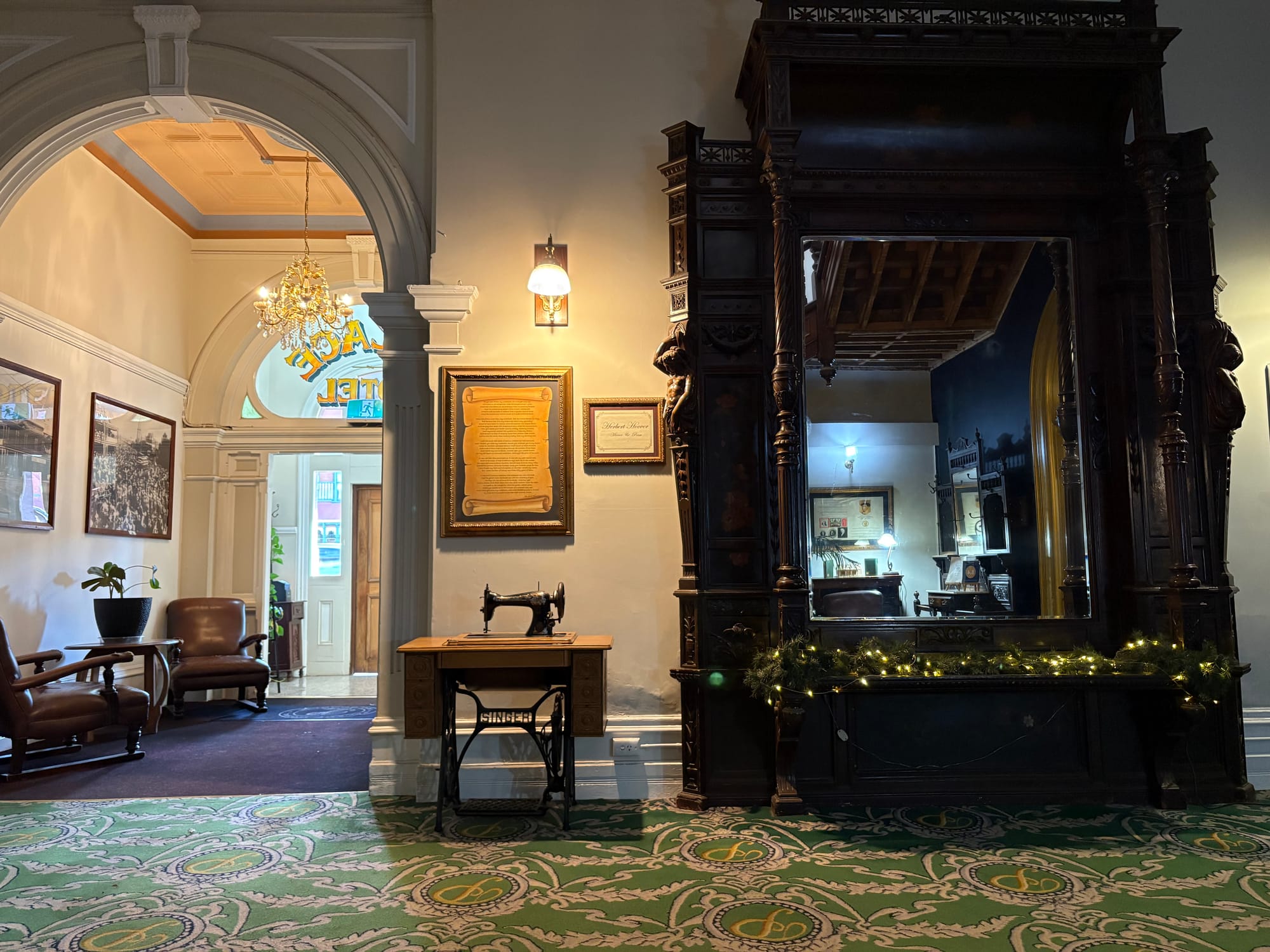
Instead, in the still mid-afternoon heat on January 26, I could have walked straight down the middle of Hannan St, the main drag named for one of the three prospectors who first struck lucky on what became known as the Golden Mile in the 1890s. No one was around. There were some inflatable kangaroos and Australian flag paraphernalia perched on the stage in the front bar of the Exchange Hotel, but it was slim pickings for the lingerie-clad British backpackers doing the rounds with the “Titty Kitty” - I assume every group present felt obliged to pay up like us, but the plastic beer jug stayed pretty empty.
The night before, a local man was killed after being tasered by police. He’d reportedly been seen wandering the streets of South Kalgoorlie with a knife. We’re told he’d harmed himself before police found him at a nearby property. We speak to family members, but no one is ready to speak publicly about it. Investigations continue.
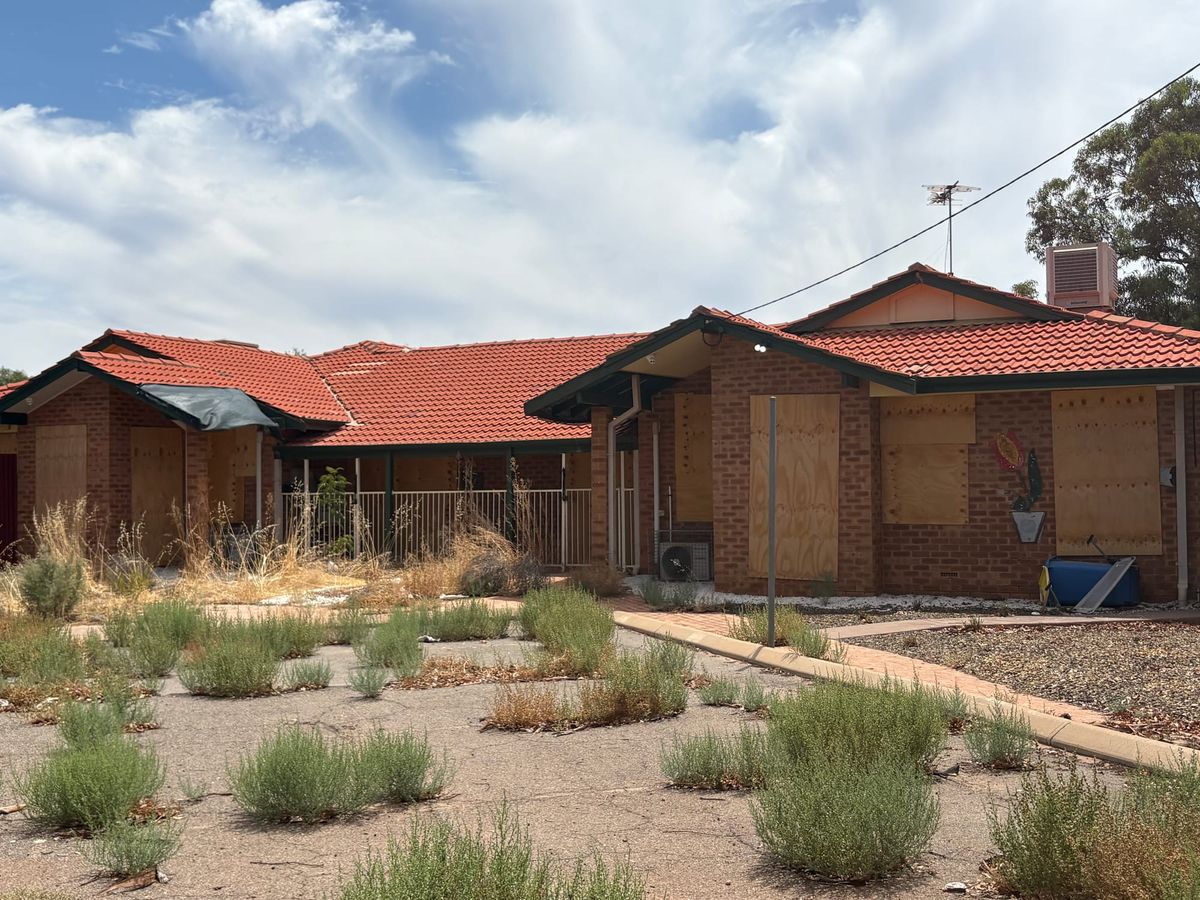
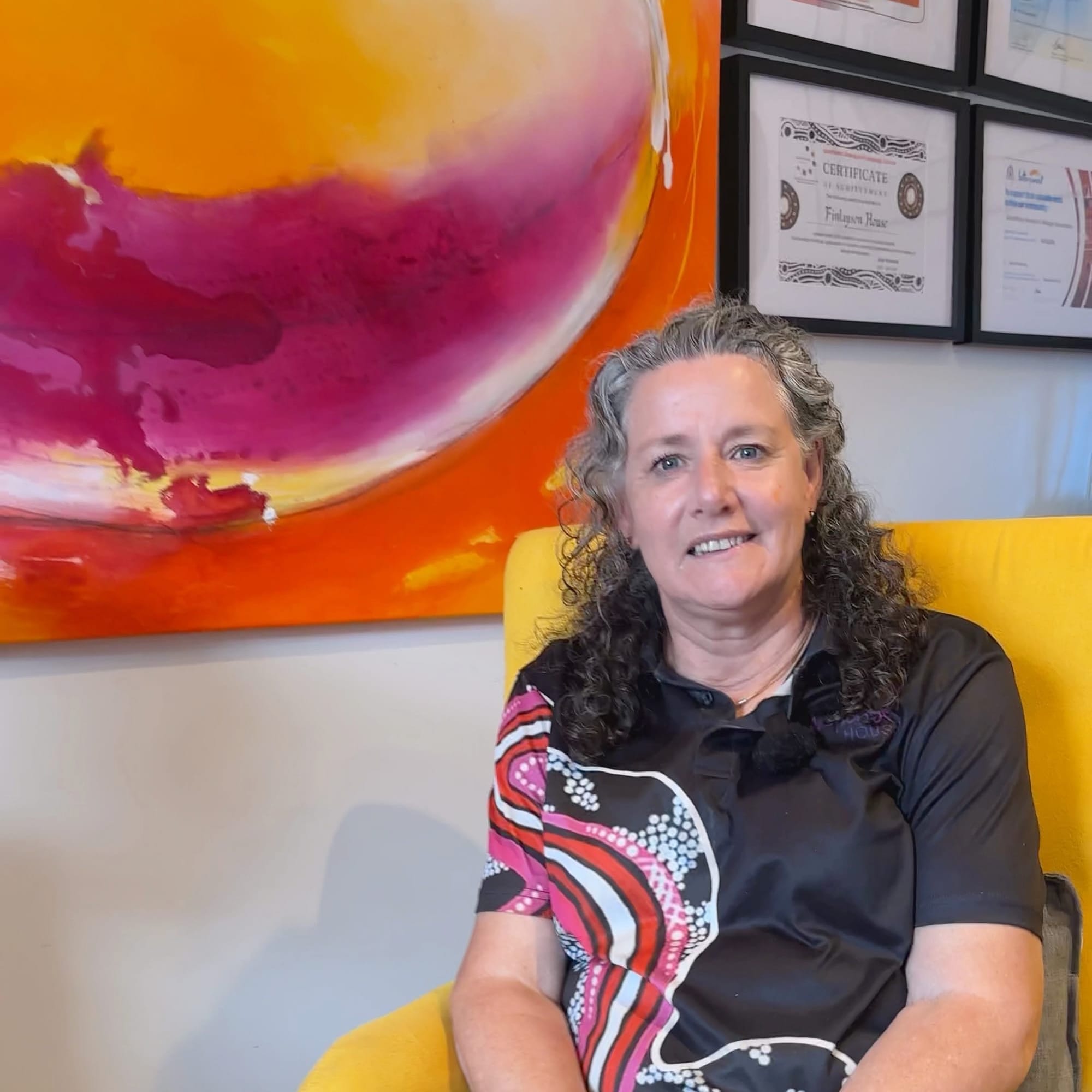
Once you start looking for it, the empty housing is everywhere. Earlier in the day, we cruise the streets and stop outside each boarded up property we come to. There’s lots of stops. According to the last data released, in mid-2024 there were fewer than 1000 public houses across the entire Goldfields region, but more than 150 were unoccupied - close to one in six. It’s the highest public housing vacancy rate in the state.
Janelle Morrison was camping outside one such property last year. She is still homeless, after years on the waitlist. “I’m sick of it,” she tells me, describing herself as suicidal. “All these empty houses.” It is a repeat refrain during our time in the town.
There are suggestions that some of the empty public housing may be renovated for sale to mining companies to house workers. We stop outside one complex of more than 20 units, all boarded up in various stages of renovation. The tiler who pulls up as we finish filming assures me the units will be return as public housing once they’re finished. He’s only been in town for a couple of weeks.
At the Museum for the Goldfields, the information plaques still advise that the Kalgoorlie Super Pit is due to be exhausted and decommissioned in 2021. But the diggers are still digging and the double decker trucks are still rolling along the freshly watered tracks at the north end of the massive inverted mountain when we head up for a look, encompassing the very leases that more than a century earlier launched the West Australian gold rush.
The price of gold reaches an all time high while we are in town thanks to Trumpian global uncertainty. But at the Boulder Camp, a stone’s throw from the edge of the Super Pit’s embankment, there’s not much sign of the resource wealth being shared. The camp primarily accommodates the Spinifex People, whose country extends past the South Australian border and centres on Tjuntjunjarra, 700 kilometres further east of Kalgoorlie. In the 1950s, they were removed from their homelands because of the Maralinga nuclear testing, with many people still exposed to the fallout.
Nowadays, this is where they stay when they’re in town. It’s a ‘wet’ camp that has been marred by violence for years. When we visit, there are dozens of people sitting in the limited shade afforded by some tin lean-tos. A handful of red tin shacks offer the only other shelter. In addition to the Super Pit, there is the noise from gas drilling rigs a few hundred metres from the camp’s edge.
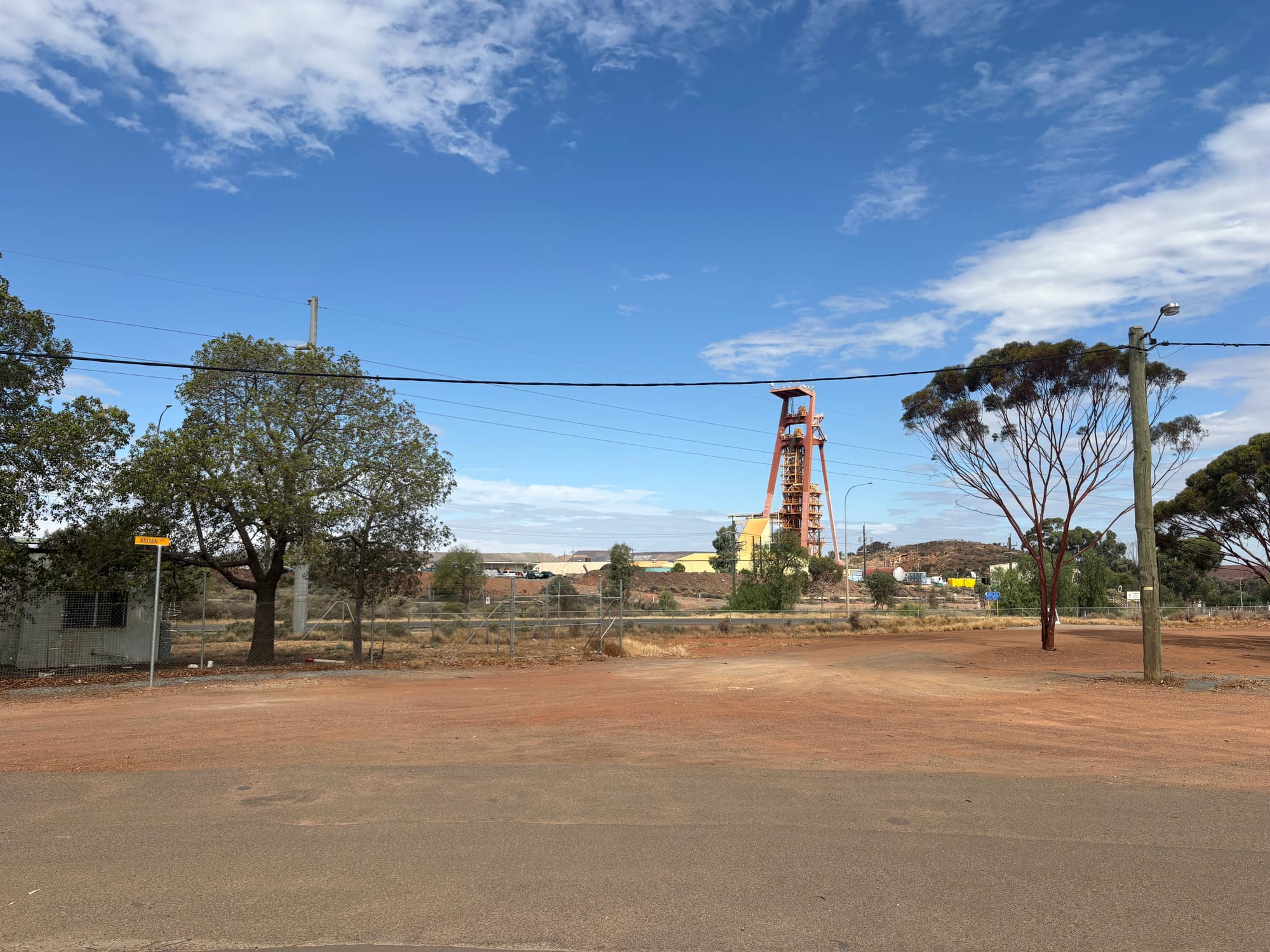
“We can’t sleep because of the sand, the vibration, the noise,” says Daniel ‘Stevie’ Sinclair, a spokesperson for the camp. Mr Sinclair has asked us to come and speak to him about the immediate threat to his people. The largest gold mine in Australia is still expanding, and will soon encroach on the very ground his people sleep on. “Look at how my people are living,” he says as we stand between the camp and the mine. “We’re supposed to be human beings.”
“We’ve got one of the biggest, richest mining companies in the world right next door. And it doesn’t support us. See all the housing? Never been developed.”
Nonetheless, Mr Sinclair is staunch. “We’re not going to leave from here. We’re going to stand here and fight for our rights.”
The mining also sits uneasily with the wider town. The entire place exists to dig gold from the ground - but where the original prospectors brought their families and all their possessions, most of the 21st Century workforce fly in and out, staying in camps out of town with catering and amenities freighted in from Perth. They don’t need to frequent the shops under the grand and fading frontages on Kalgoorlie’s wide streets, and most of the old hotels are shuttered. Instead, the mining companies buy up housing for short-term workers’ accommodation.
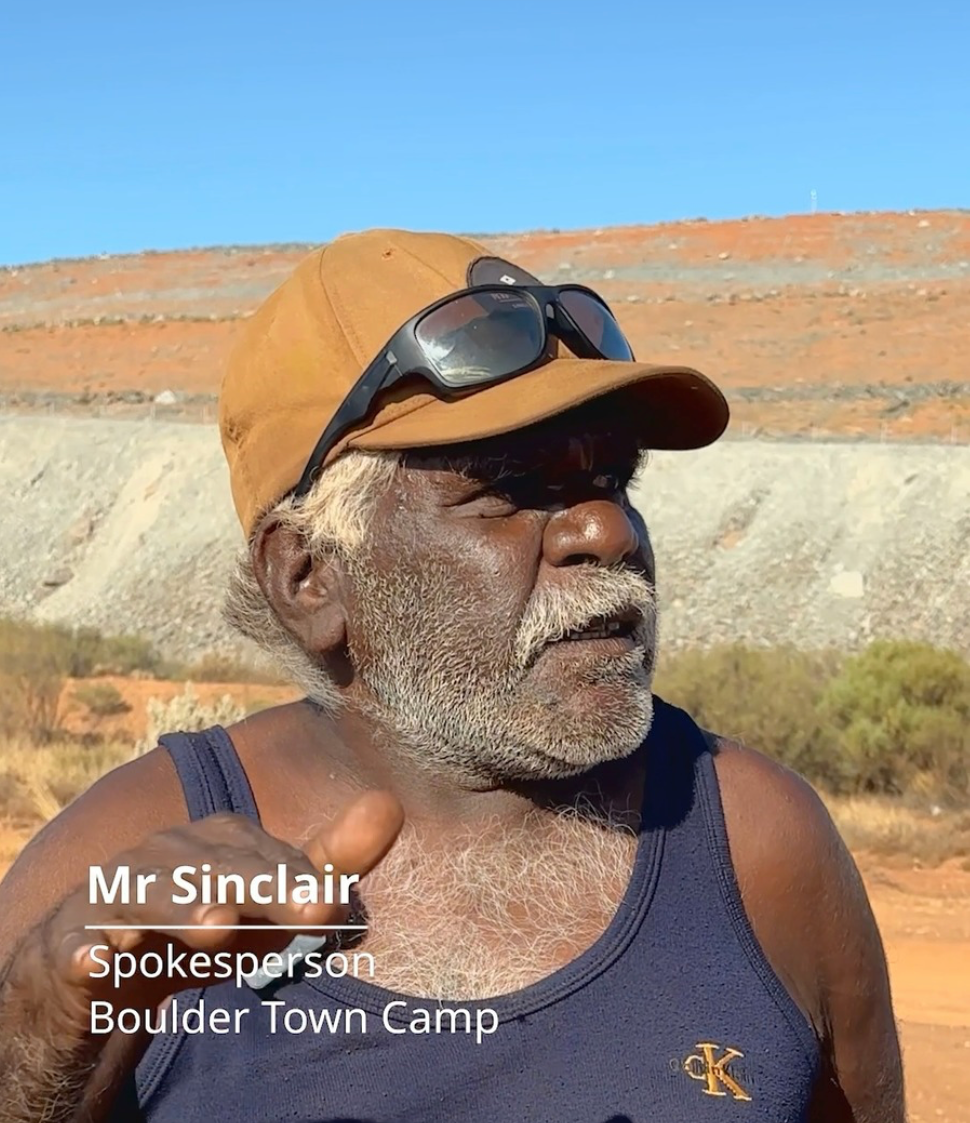
At the Goldfield Women’s Refuge, the message from CEO Susie Williams is straight to the point. “We just need housing. We just need housing.”
They can currently provide up to 56 beds for women and children fleeing family and violence. That capacity recently increased due to the installation of six modular family units at the back of their property, each bearing the name of a mining company on their front door. We enter the Mineral Resources unit, which costs about a quarter of a million dollars and can accommodate up to six kids. Inside it looks brand new. Suzie wants to emphasise how generous the mining companies can be. But she’s even clearer about where the ultimate responsibility sits.
“It's costing the government so much money for lack of housing,” she says, referring to the “generational impact” on children of a lack of secure accommodation. She tells me about one mother who recently had to leave town and move to Queensland due to a lack of any safe accommodation to return to from her stay at the refuge.
“She's trapped in an escalating cycle that is fundamentally kept in place by a lack of housing.”
When I ask about a message to the government, her focus is familiar.
“We know there’s houses out there. We know they're empty. We know they're boarded up. Please, just make them more accessible.”
So, I ask her, if these empty, boarded up houses were made available as homes for the families at Finlayson House, would it have a direct impact on domestic and family violence?
“Absolutely. Absolutely.”
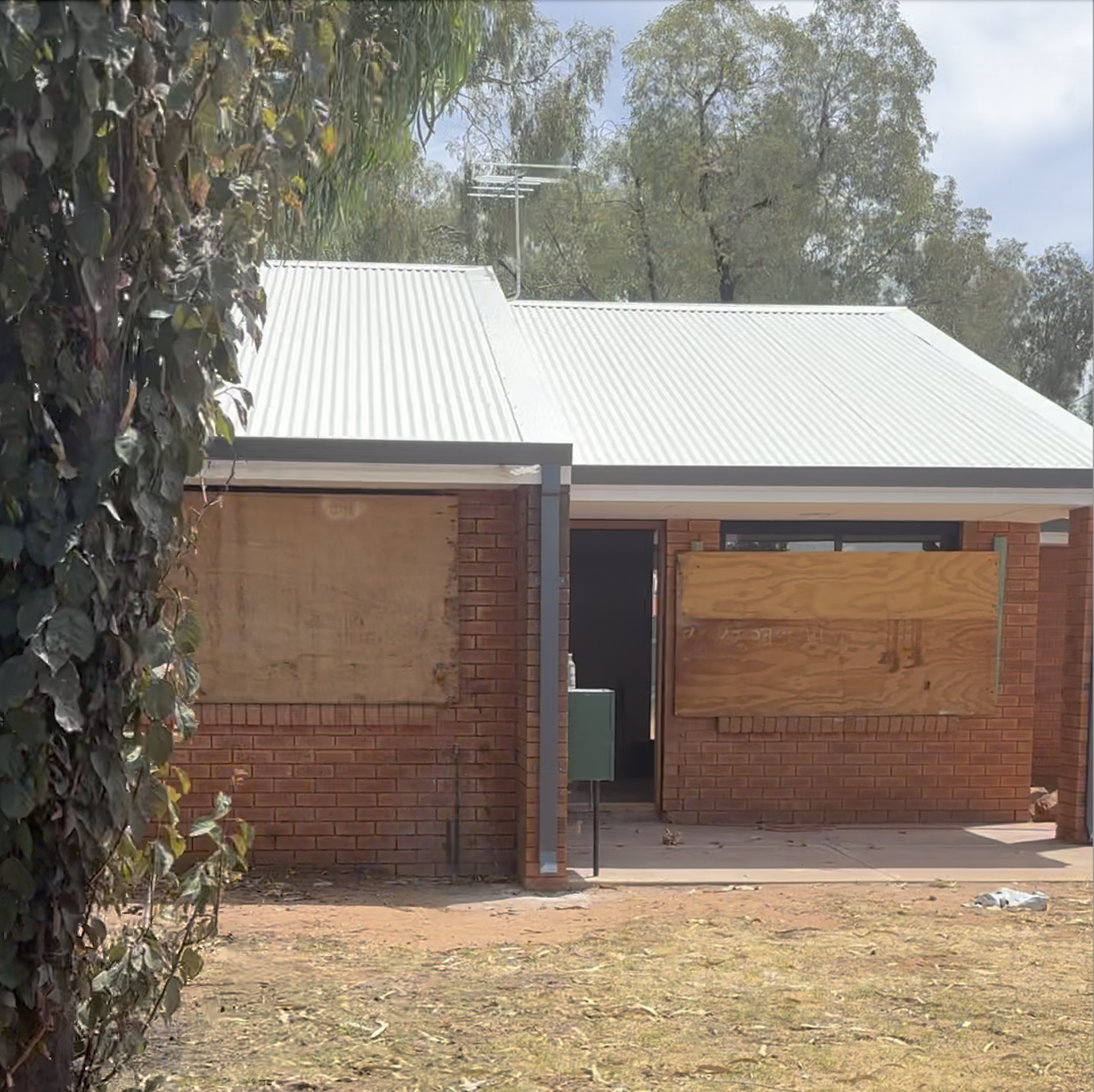
At the Goldfields Indigenous Housing Organisation, CEO Marelda Tucker tells me that it took them approximately two weeks to repair a property that had been boarded up following the departure of the previous tenant, and says that her organisation would jump at the chance to manage some of the empty government homes in town.
“There's houses that are boarded up and it's a little frustrating driving past thinking, ‘look, we could easily manage that’, you know?” she tells me. “We would love to manage these properties. We'd love to take them down those boards. But we just need the funding.”
“We just need the resources.”
Neither Housing Minister John Carey nor the Department of Housing and Works responded to detailed questions about Kalgoorlie public housing.
Patricia Blowes is still waiting for her own public housing as she prepares for her fathers’ funeral. “It’s really upsetting being here in the house where he was and where we were taking care of him,” she tells me, by phone this time.
“In our tradition, after someone dies you go and grieve somewhere else and then you get someone to come in and smoke it out, and then you move back into the house. But we’ve got nowhere else to go to do all of that.”
“We drive around everywhere, as well, and we see empty houses. Because they’re not fixing them up for people.”
“People out there are homeless, living in their cars with kids, sleeping on the streets. And then they go and break into houses because they’re empty and they go and sleep in them - because they’ve got nowhere else to go.”